How long-term factory partnerships help streetwear brands grow faster

A streetwear supplier partnership becomes more valuable when it improves over time. Long-term factory relationships help brands reduce repeated mistakes, build clearer development habits, and create more stable production systems.

Why switching manufacturers feels like progress but often resets your growth

In the early stages of building a brand, changing a clothing manufacturer can feel like a natural response to challenges. When results are inconsistent or timelines become difficult to manage, moving to a new partner appears to offer a reset.

When brands begin evaluating an apparel factory partnership, this decision often feels even more logical, as switching between manufacturers seems like a faster way to improve results than building a stable apparel factory partnership over time.

At first, this decision often brings short term improvement. A new clothing manufacturer may provide fresh attention, clearer communication, or a better initial outcome. This creates the impression that switching has solved the problem.

But over time, the same pattern tends to repeat. Each new collaboration requires time to re establish understanding. Product details need to be explained again. Adjustments that were previously resolved must be revisited.

What feels like forward movement begins to create hidden repetition.

The issue is not the act of switching itself. The issue is that frequent switching prevents the development of continuity. Without continuity, progress cannot accumulate.
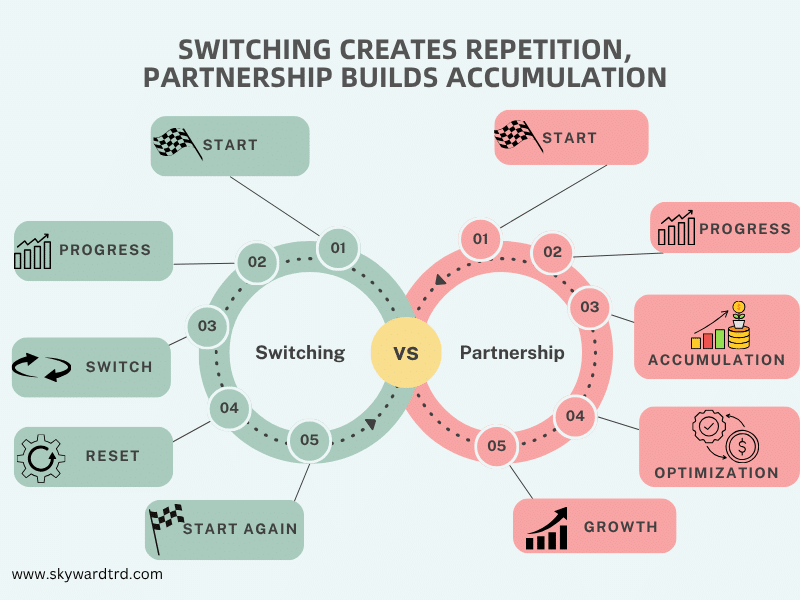
apparel factory partnership compared with switching manufacturers, showing how switching creates repetitive resets while long term partnership builds accumulation, optimization, and growth over time..

Why what looks like a factory problem is often a repeated structural cycle

When brands change a clothing manufacturer, the reason is usually framed around visible issues. Delays, inconsistencies, or communication difficulties are treated as isolated problems tied to a specific partner.


Recognize the early signs of clothing manufacturer problems before they repeat

These explanations are not incorrect, but they are incomplete.

What is often overlooked is that similar issues can appear again with a different clothing manufacturer. The details may change, but the pattern remains.

This suggests that the problem is not only about individual performance. It is also about how the relationship is structured.

When collaboration does not have enough time to stabilize, every new partnership begins from a similar starting point. Processes are not yet aligned. Expectations are still being defined. Small misunderstandings are more likely to occur.

From the surface, it appears that changing the factory is solving problems. In reality, it is often restarting the same cycle.
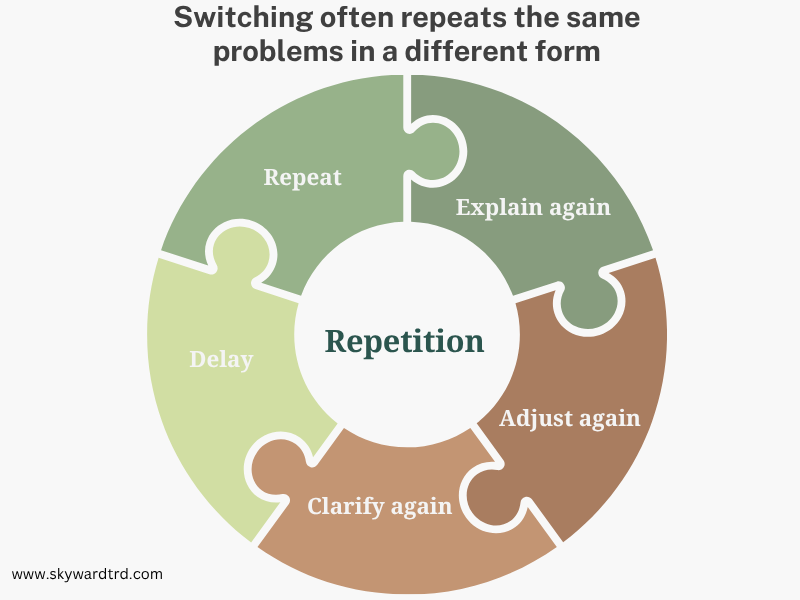
apparel factory partnership highlighting how switching manufacturers leads to repeated production problems, including delays, rework, repeated clarification, and constant adjustments in a recurring cycle.

What long-term partnerships build that short-term collaboration cannot

When a brand works with the same clothing manufacturer over a longer period, a different dynamic begins to form.

Information does not need to be reintroduced at every stage. The manufacturer becomes familiar with how the brand approaches design, how decisions are made, and how adjustments are handled.

This is where a true apparel factory partnership begins to take shape.


Understand how garment factory evaluation impacts long-term collaboration quality

This familiarity reduces friction.

This is where a deeper apparel factory partnership begins to reduce not only operational friction, but also long-term uncertainty.

Fewer clarifications are required. Processes become more efficient. Communication becomes more precise because it is built on shared context rather than repeated explanation.

These advantages are not always visible at the beginning. They develop gradually, as the collaboration deepens.

Short term partnerships can produce results, but they rarely create this level of accumulated efficiency. Each new relationship starts without the benefit of what was learned previously.
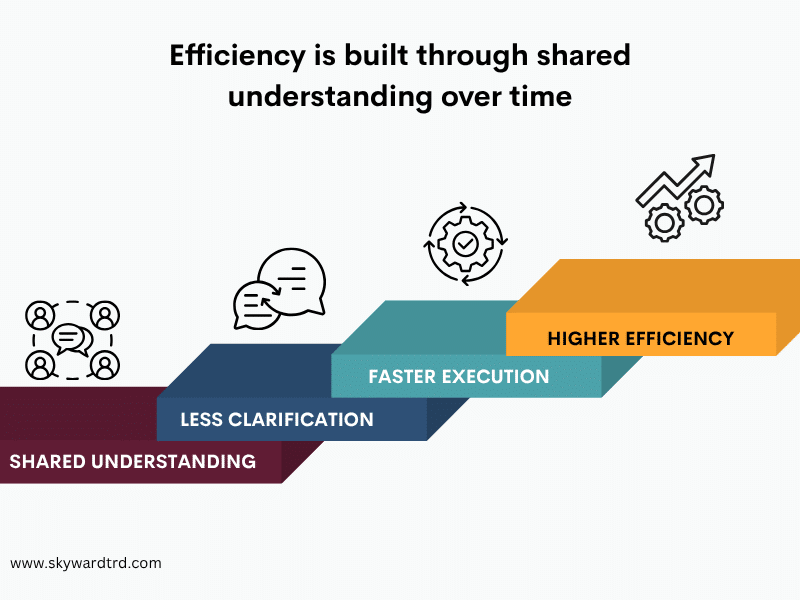
apparel factory partnership showing how shared understanding over time reduces clarification, speeds up execution, and leads to higher production efficiency.

How consistent collaboration allows systems to improve with every cycle

The most significant difference in long-term partnerships is how the system evolves.

When a clothing manufacturer works consistently with the same brand, internal processes begin to adapt. Teams learn how to interpret the brand’s requirements more accurately. Adjustments become easier to process because similar situations have been handled before.

Over time, this creates a more refined workflow.


See why choosing a cheap clothing manufacturer often increases long-term cost

Development becomes more efficient because less time is spent clarifying intent. Production becomes more stable because expectations are already aligned. Changes can be integrated without disrupting the overall process.

This is not simply about familiarity. It is about system optimization.

Each cycle builds on the previous one. Instead of repeating the same steps, the process becomes progressively more streamlined.

This type of improvement cannot occur when partnerships are frequently interrupted.

This is where working with a custom streetwear manufacturer that focuses on long-term system development, rather than short-term results, becomes a key advantage for growing brands.
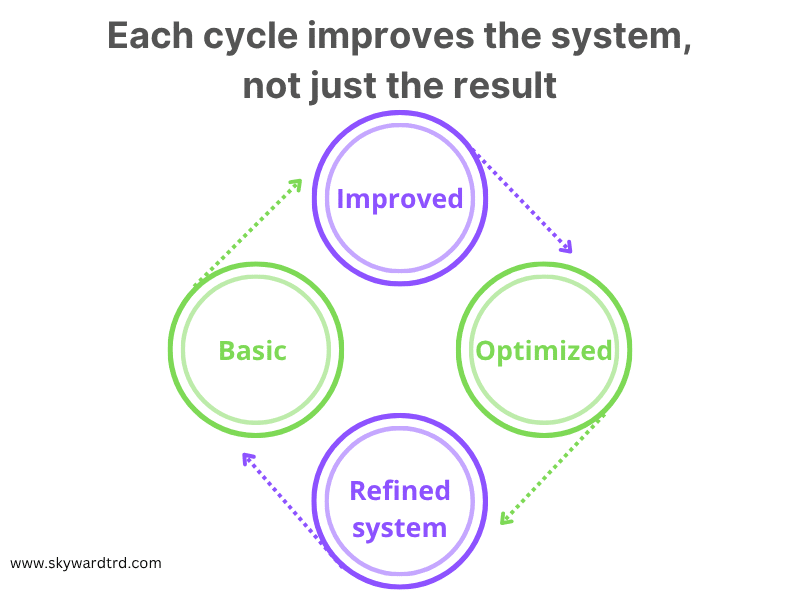
apparel factory partnership showing how repeated production cycles improve the system over time, evolving from basic processes to optimized and refined manufacturing systems.

Why stable partnerships are what actually allow streetwear brands to scale

Growth in streetwear is often associated with design, marketing, and positioning. These elements are important, but they rely on something less visible to function effectively.

Execution is what determines whether growth can actually be sustained.

When production is unstable, growth becomes difficult to sustain. Delays affect release schedules. Inconsistencies affect product perception. Additional corrections consume time that could be spent on development.


Explore what defines a reliable streetwear manufacturer for long-term growth

When production becomes stable, the dynamic changes.

Timelines become more predictable. Results become more consistent. Teams can focus on improving products rather than managing disruptions.

This is where a strong apparel factory partnership begins to influence growth directly, turning production from a variable cost into a long-term strategic advantage.

The advantage is not just operational. It becomes strategic.


Build a long-term apparel factory partnership that supports your growth

Because over time, the brands that grow more efficiently are not the ones that change the fastest, but the ones that build systems that improve with each cycle.
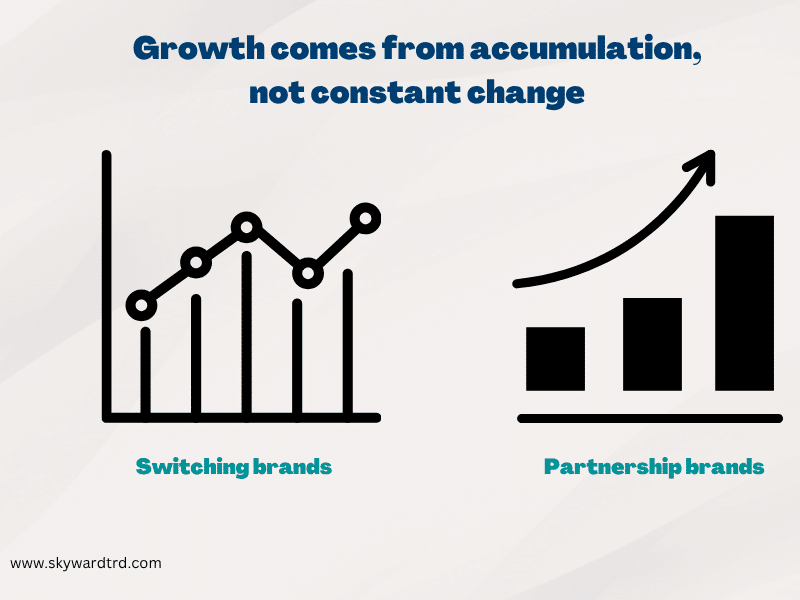
apparel factory partnership showing how long term collaboration drives consistent growth and scalability, while switching manufacturers leads to unstable progress and repeated setbacks.

Recent Posts

long-term apparel factory partnership helping streetwear brands scale production with consistent and efficient systems.

How long-term factory partnerships help streetwear brands grow faster

How long-term factory partnerships help streetwear brands grow faster A streetwear supplier partnership becomes more valuable when it improves over time. Long-term factory relationships help brands reduce repeated mistakes, build clearer development habits, and create more stable production systems. Why switching manufacturers feels like progress but often resets your growth In the early stages of

Read More »
choosing a cheap clothing manufacturer for streetwear production can lead to higher long-term costs and inefficiencies.

Why the best streetwear manufacturers are not always the cheapest

Why the best streetwear manufacturers are not always the cheapest Cheap clothing manufacturer hidden costs often appear after the first quote looks attractive. Repeated sampling, unclear communication, delays, quality issues, and weak supplier systems can make the lowest price more expensive over time. Why choosing the lowest price feels right at the beginning but becomes

Read More »
garment factory evaluation for streetwear brands focusing on internal systems behind clothing manufacturers.

Behind the factory door: What brands should really look for in a manufacturer

Behind the factory door: What brands should really look for in a manufacturer Garment factory evaluation should look beyond a clean sample or a low quote. Brands need to understand how a supplier communicates, manages development, handles revisions, and supports production before committing to a long-term workflow. Why most manufacturers look similar at the beginning

Read More »
streetwear brand experiencing clothing manufacturer problems and struggling with inconsistent production results.

5 signs you’re working with the wrong clothing manufacturer

5 signs you’re working with the wrong clothing manufacturer Clothing manufacturing problems rarely appear out of nowhere. For streetwear brands, small delays, unclear sample feedback, repeated corrections, and unstable communication often reveal deeper supplier system issues. Why most brands only realize the problem after it’s already too late Many brands begin working with a clothing

Read More »
how consistency in streetwear product development is achieved through structured systems.

The Hidden Work Behind Every Successful Streetwear Sample

The Hidden Work Behind Every Successful Streetwear Sample Garment sample development is more than making one good-looking sample. For streetwear brands, consistency comes from clear specs, material review, fit comments, revision control, and supplier systems that can repeat the result. Apparel sample development is what determines whether streetwear samples can deliver consistency. Many suppliers can

Read More »
why streetwear designs fail in production due to garment construction issues.

Why some streetwear designs look great on paper but fail in production

Why some streetwear designs look great on paper but fail in production Garment construction issues are one of the reasons strong streetwear designs fail in production. A design can look clear on paper, but fabric behavior, seams, fit, trims, and manufacturing limits decide whether it can be produced consistently. Many designs don’t fail in production,

Read More »
garment product development from sketch to sample showing translation into real streetwear products

From sketch to sample: what actually happens inside product development

From sketch to sample: what actually happens inside product development Garment sample development is the bridge between a design idea and a product that can be produced consistently. The sketch matters, but the real work happens when materials, construction, fit, and supplier instructions become clear enough to sample. Design may feel clear, but most problems

Read More »
streetwear tech pack development process illustration showing how tech packs improve sampling efficiency and manufacturing consistency.

Why a Good Tech Pack Can Save Months of Development Time

Why a Good Tech Pack Can Save Months of Development Time Streetwear tech pack development saves time because it turns design direction into production instructions. A clear tech pack helps suppliers understand construction, materials, fit, trims, artwork, and revision expectations before sampling begins. Development often slows down where structure is missing Streetwear tech pack is

Read More »
streetwear sampling stage where products begin to fail during product development and manufacturing process.

The moment most streetwear products fail: Inside the streetwear sampling stage

The moment most streetwear products fail: Inside the streetwear sampling stage Streetwear sampling insights matter because many product problems appear before bulk production begins. When materials, fit comments, trims, construction details, and supplier communication are unclear, a sample can look promising but still fail later. Streetwear sampling is where design gets tested and products either

Read More »
Streetwear brands production and sourcing insights for scaling labels

Why Collaborative Suppliers Are Becoming the Competitive Advantage for Streetwear Brands

Why Collaborative Suppliers Are Becoming the Competitive Advantage for Streetwear Brands A strong streetwear supplier partnership gives brands more than production capacity. Collaborative suppliers help clarify development decisions, reduce repeated mistakes, and support more stable growth from sample to production. From production executors to strategic partners: a shift in streetwear supply dynamics The rise of

Read More »
Streetwear brands production and sourcing insights for scaling labels

How Streetwear Brands Stay Connected: Beyond Trends and Into Long-Term Relevance

How Streetwear Brands Stay Connected: Beyond Trends and Into Long-Term Relevance Streetwear brand loyalty is not built by chasing every trend. It grows when product experience, development rhythm, supplier communication, and delivery consistency all support the same brand promise. Style may evolve, but brand experience builds loyalty In today’s fast-moving streetwear market, new brands seem

Read More »
Streetwear brands production and sourcing insights for scaling labels

What Really Drives Streetwear Brands’ Growth, Beyond Just Products

What Really Drives Streetwear Brands’ Growth, Beyond Just Products Streetwear brand growth depends on more than product ideas. As collections expand, stronger supply systems help brands keep development, sampling, production, and delivery moving with less uncertainty. As collections expand, supply systems become the backbone Many streetwear brands begin with a few core items, a graphic

Read More »
Streetwear brands production and sourcing insights for scaling labels

Beyond Pricing: What Streetwear Brands Really Look for in Suppliers

Beyond Pricing: What Streetwear Brands Really Look for in Suppliers A reliable streetwear supplier partnership is not decided by price alone. Brands need development support, communication rhythm, production clarity, and long-term fit before supplier cost can be judged properly. Why pricing alone doesn’t define a reliable production relationship As streetwear brands continue to grow and

Read More »
Streetwear brands production and sourcing insights for scaling labels

Why Quoting Isn’t That Simple: A Real Talk for Streetwear Brands

Why Quoting Isn’t That Simple: A Real Talk for Streetwear Brands A streetwear quotation process is not only about receiving a number. The quote becomes more accurate when the brand, supplier, materials, sample details, MOQ, and production timeline are all clear enough to evaluate together. Understanding the true nature of production costs in streetwear manufacturing

Read More »
Shopping Cart
Scroll to Top

Send Us A Message