Why switching manufacturers feels like progress but often resets your growth
In the early stages of building a brand, changing a clothing manufacturer can feel like a natural response to challenges. When results are inconsistent or timelines become difficult to manage, moving to a new partner appears to offer a reset.
When brands begin evaluating an apparel factory partnership, this decision often feels even more logical, as switching between manufacturers seems like a faster way to improve results than building a stable apparel factory partnership over time.
At first, this decision often brings short term improvement. A new clothing manufacturer may provide fresh attention, clearer communication, or a better initial outcome. This creates the impression that switching has solved the problem.
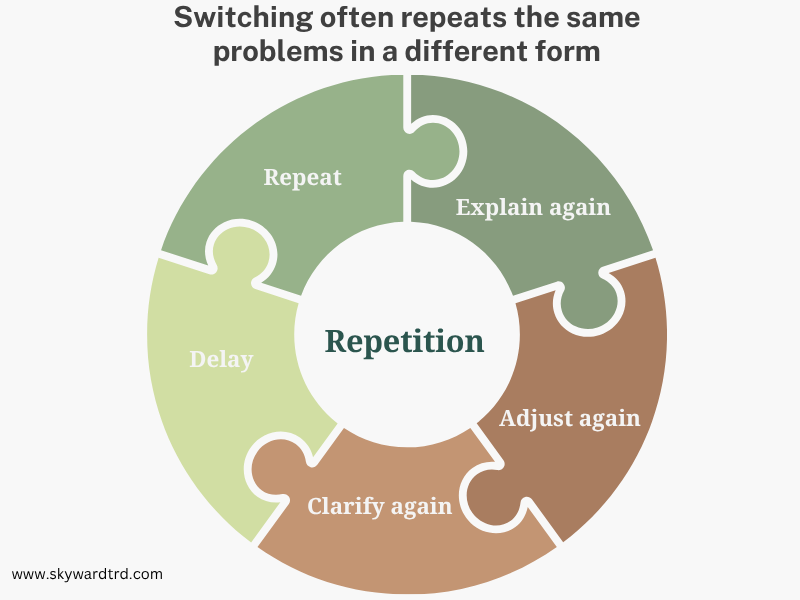
But over time, the same pattern tends to repeat. Each new collaboration requires time to re establish understanding. Product details need to be explained again. Adjustments that were previously resolved must be revisited.
What feels like forward movement begins to create hidden repetition.
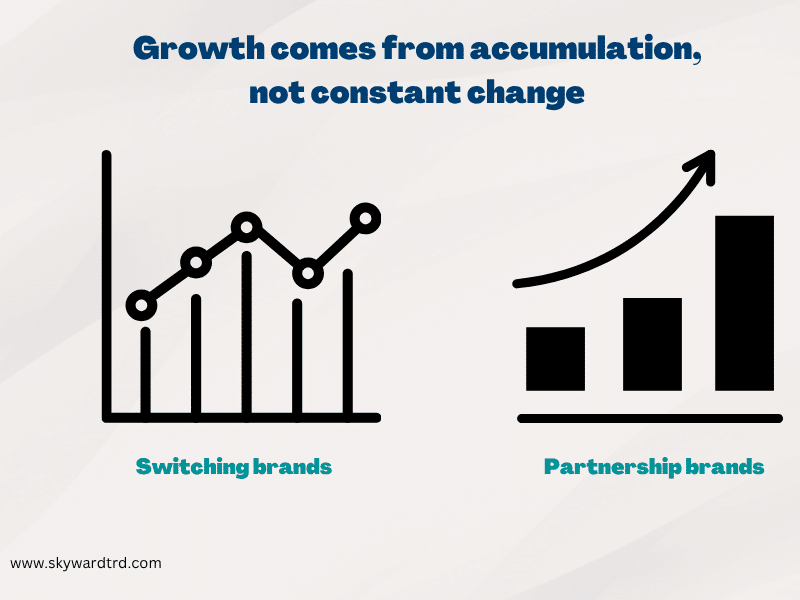
The issue is not the act of switching itself. The issue is that frequent switching prevents the development of continuity. Without continuity, progress cannot accumulate.
Why what looks like a factory problem is often a repeated structural cycle
When brands change a clothing manufacturer, the reason is usually framed around visible issues. Delays, inconsistencies, or communication difficulties are treated as isolated problems tied to a specific partner.
These explanations are not incorrect, but they are incomplete.
What is often overlooked is that similar issues can appear again with a different clothing manufacturer. The details may change, but the pattern remains.
This suggests that the problem is not only about individual performance. It is also about how the relationship is structured.
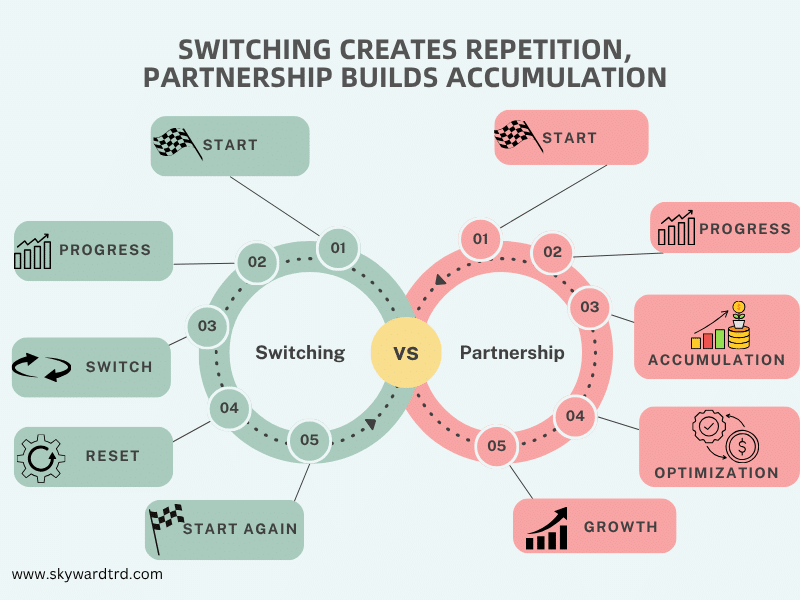
When collaboration does not have enough time to stabilize, every new partnership begins from a similar starting point. Processes are not yet aligned. Expectations are still being defined. Small misunderstandings are more likely to occur.
From the surface, it appears that changing the factory is solving problems. In reality, it is often restarting the same cycle.
What long-term partnerships build that short-term collaboration cannot
When a brand works with the same clothing manufacturer over a longer period, a different dynamic begins to form.
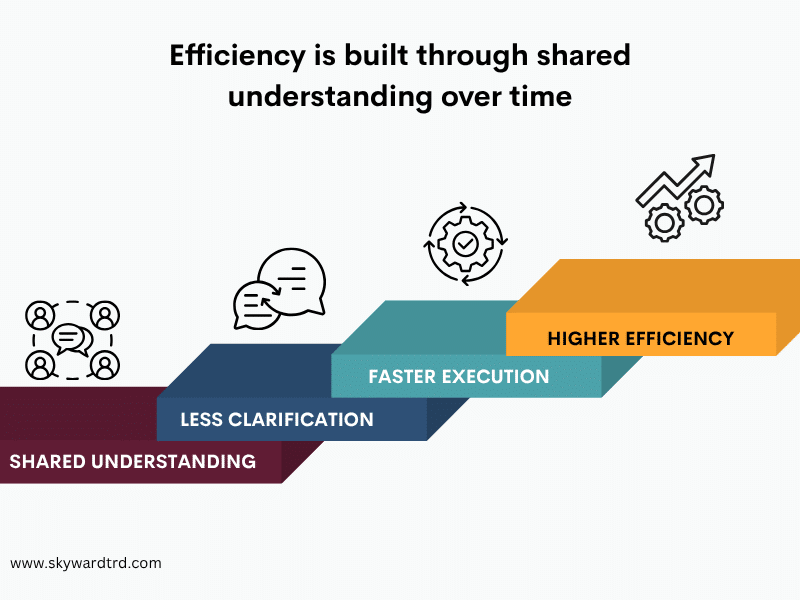
Information does not need to be reintroduced at every stage. The manufacturer becomes familiar with how the brand approaches design, how decisions are made, and how adjustments are handled.
This is where a true apparel factory partnership begins to take shape.
This familiarity reduces friction.
This is where a deeper apparel factory partnership begins to reduce not only operational friction, but also long-term uncertainty.
Fewer clarifications are required. Processes become more efficient. Communication becomes more precise because it is built on shared context rather than repeated explanation.
These advantages are not always visible at the beginning. They develop gradually, as the collaboration deepens.
Short term partnerships can produce results, but they rarely create this level of accumulated efficiency. Each new relationship starts without the benefit of what was learned previously.
How consistent collaboration allows systems to improve with every cycle
The most significant difference in long-term partnerships is how the system evolves.
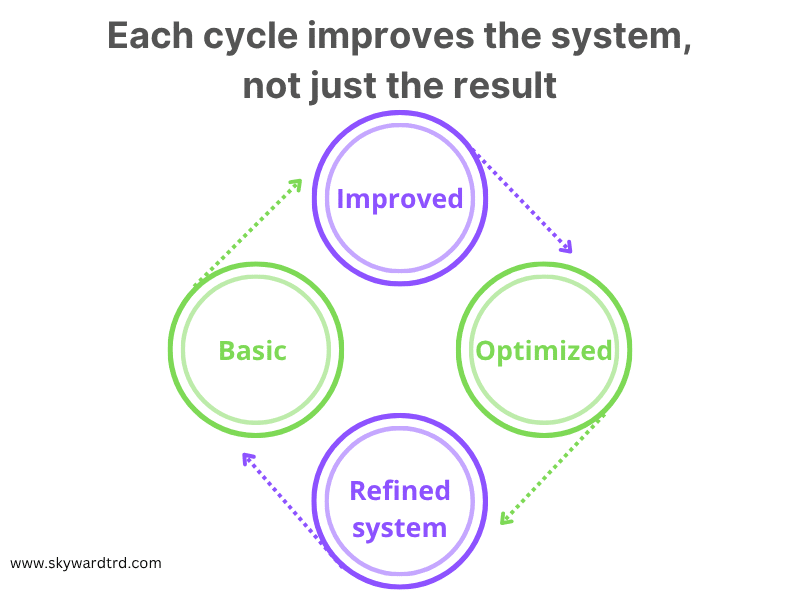
When a clothing manufacturer works consistently with the same brand, internal processes begin to adapt. Teams learn how to interpret the brand’s requirements more accurately. Adjustments become easier to process because similar situations have been handled before.
Over time, this creates a more refined workflow.
Development becomes more efficient because less time is spent clarifying intent. Production becomes more stable because expectations are already aligned. Changes can be integrated without disrupting the overall process.
This is not simply about familiarity. It is about system optimization.
Each cycle builds on the previous one. Instead of repeating the same steps, the process becomes progressively more streamlined.
This type of improvement cannot occur when partnerships are frequently interrupted.
Why stable partnerships are what actually allow streetwear brands to scale
Growth in streetwear is often associated with design, marketing, and positioning. These elements are important, but they rely on something less visible to function effectively.
Execution is what determines whether growth can actually be sustained.
When production is unstable, growth becomes difficult to sustain. Delays affect release schedules. Inconsistencies affect product perception. Additional corrections consume time that could be spent on development.
When production becomes stable, the dynamic changes.
Timelines become more predictable. Results become more consistent. Teams can focus on improving products rather than managing disruptions.
This is where a strong apparel factory partnership begins to influence growth directly, turning production from a variable cost into a long-term strategic advantage.
The advantage is not just operational. It becomes strategic.
Because over time, the brands that grow more efficiently are not the ones that change the fastest, but the ones that build systems that improve with each cycle.