Why choosing the lowest price feels right at the beginning but becomes expensive over time
When brands evaluate a streetwear manufacturer, pricing often becomes the most immediate reference point. It is clear, measurable, and easy to compare across different options.
When searching for a cheap clothing manufacturer, this comparison feels even more straightforward. The lowest price appears to reduce risk, improve margins, and create a faster path to production.
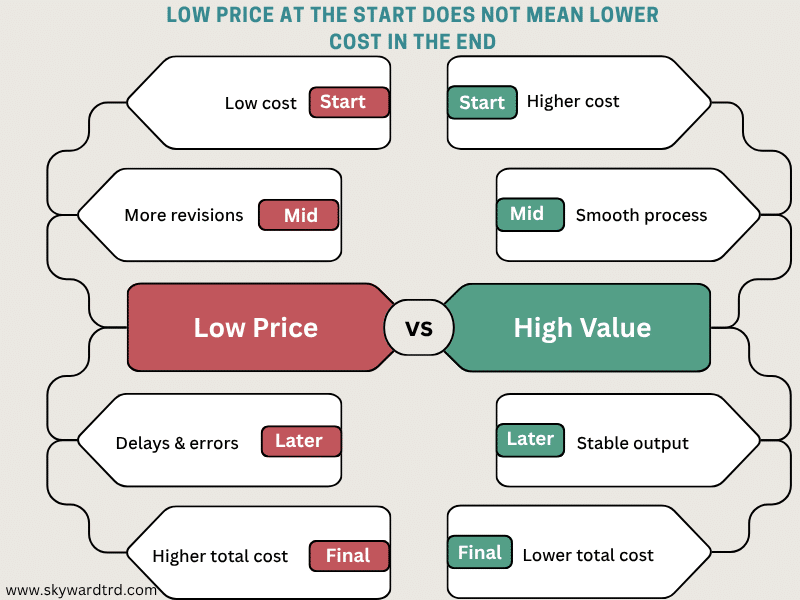
At the beginning, choosing a lower price feels like a smart decision. It reduces upfront investment, improves margin expectations, and allows brands to move forward with less perceived risk.
This logic is understandable. In early stages, controlling cost feels like controlling the business.
But over time, many brands begin to experience a different kind of pressure. These are often early signs of working with a cheap clothing manufacturer where structural limitations start to appear. Projects require more revisions than expected. Timelines stretch beyond initial estimates. Outcomes become less predictable, even when the same instructions are given.
At that point, the original price advantage begins to lose its meaning.
The issue is not that lower pricing is inherently wrong. The issue is that the decision is often based on an incomplete understanding of what cost actually represents when working with a streetwear manufacturer.
Why the price you compare is not the cost you actually pay
When brands compare manufacturers, they are usually comparing quotations. This creates the impression that cost is a fixed number that can be evaluated upfront.
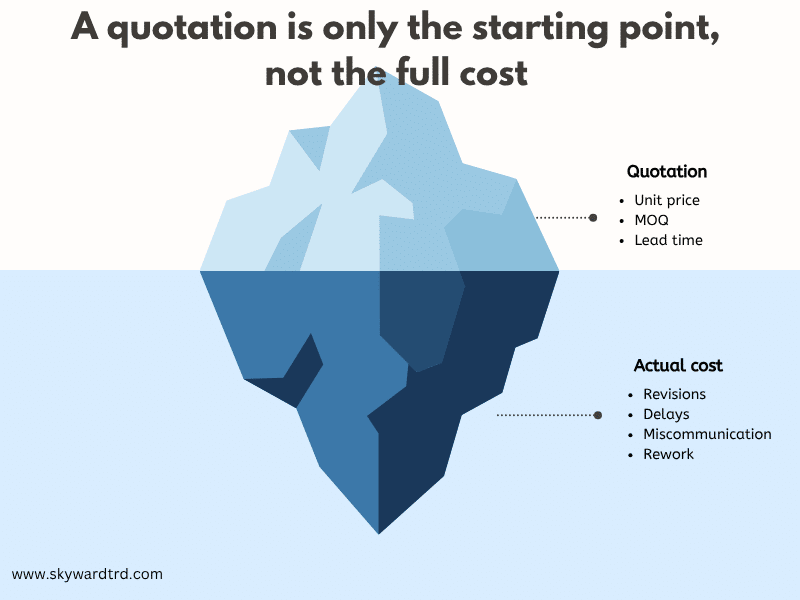
In reality, the quotation is only a starting point.
The actual cost of working with a streetwear manufacturer unfolds over time. It includes how efficiently communication happens, how accurately information is interpreted, and how consistently results are delivered across different stages.
When working with a cheap clothing manufacturer, these hidden costs often appear as repeated clarification, additional revisions, and longer timelines.
When these elements are stable, the process moves forward with fewer interruptions. When they are not, additional time is required to clarify, adjust, and correct.
These additional efforts are rarely captured in the initial quotation, but they accumulate throughout the process.
As a result, what appears to be a lower cost at the beginning can gradually become more expensive when viewed across the entire production cycle.
The number that is easiest to compare is often not the number that matters most.
What low pricing actually reveals about how a manufacturer operates
Pricing does not exist in isolation. It reflects how a streetwear manufacturer operates internally.
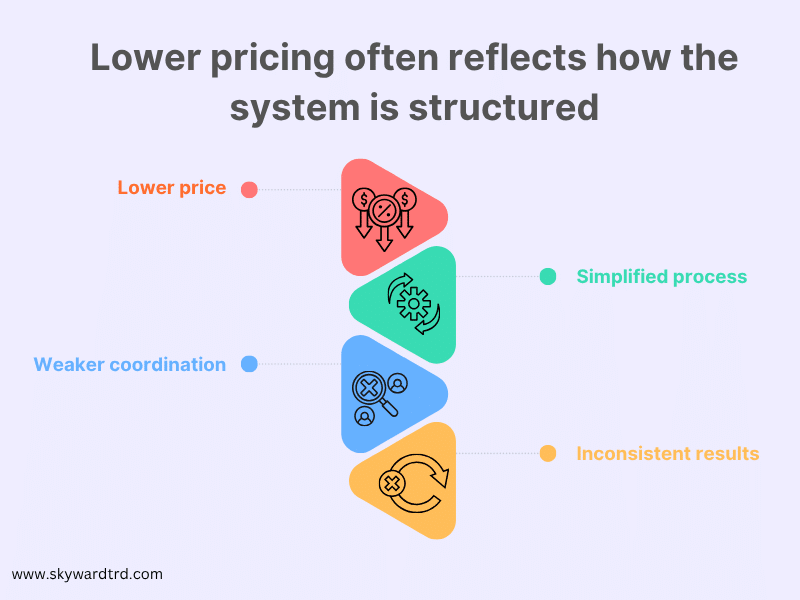
A cheap clothing manufacturer often achieves lower pricing by simplifying certain aspects of the process. This may include less structured coordination between teams, fewer standardized procedures, or a more reactive approach to handling changes.
At the beginning, these differences may not be visible. A sample can still be produced, and initial communication can still feel responsive.
However, as the process becomes more complex, these structural limitations begin to surface. Information may need to be repeated across stages. Adjustments may take longer to process. Outputs may vary even when inputs remain consistent.
These patterns are not random. They are connected to how the system is organized.
Lower pricing often reflects not just a financial decision, but an operational structure that requires more effort to manage over time.
What actually defines a high value streetwear manufacturer
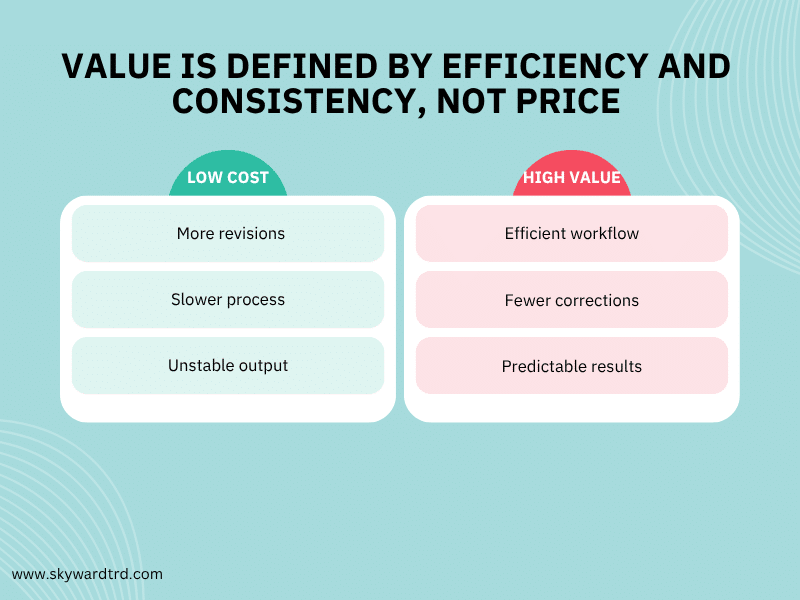
A higher priced streetwear manufacturer is not simply charging more for the same outcome. The difference often lies in how the system supports consistency and efficiency.
In a well structured environment, information flows more clearly between stages. Development, sampling, and production are connected in a way that reduces repetition. Adjustments are processed with greater precision, and results are more predictable across different runs.
This does not eliminate complexity, but it allows complexity to be managed.
Over time, this creates a different experience. Fewer corrections are needed. Timelines become more reliable. Communication requires less back and forth to achieve the same level of clarity.
The value is not in the initial output, but in how consistently that output can be maintained.
A high value streetwear manufacturer is defined not by price, but by the stability and efficiency of the system behind it.
Why thinking in total cost will change how you choose a manufacturer
The way a streetwear manufacturer is evaluated changes significantly when cost is understood as a broader concept.
Instead of focusing only on the initial quotation, the perspective expands to include how much time is required to manage the process, how often adjustments need to be made, and how predictable the outcomes are over multiple cycles.
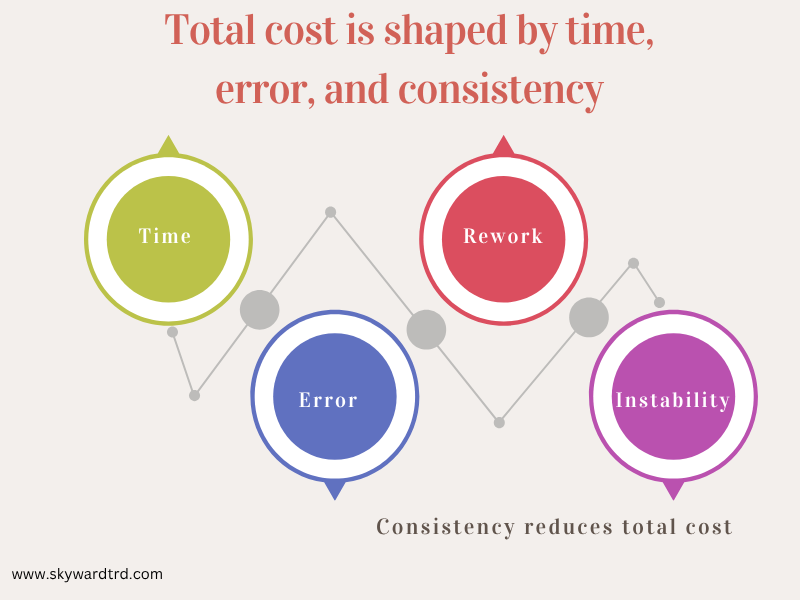
Cost becomes a combination of time, error, and stability.
When this perspective is applied, the lowest price is no longer automatically the most efficient choice. Even when comparing a cheap clothing manufacturer, what matters is how the entire process performs over time.
Brands that adopt this approach begin to make different decisions. They look beyond immediate savings and consider how a manufacturer supports long term consistency.
Because in practice, the most efficient choice is not the one that appears cheapest at the beginning, but the one that reduces friction throughout the entire process.