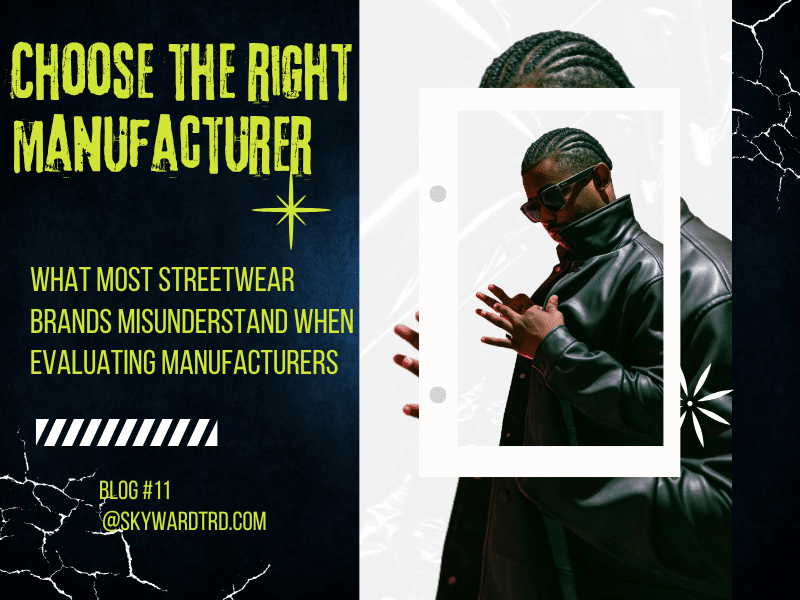
Knowing how to choose a streetwear manufacturer helps brands avoid costly production mistakes. The right partner is not only the factory that can make a sample, but the supplier that can support communication, revisions, consistency, and growth.
Why most brands think they are choosing the right manufacturer but are not
At some point, every brand begins searching for a streetwear manufacturer. The decision often feels critical, yet surprisingly straightforward. There are options available, samples can be made, and communication seems manageable.
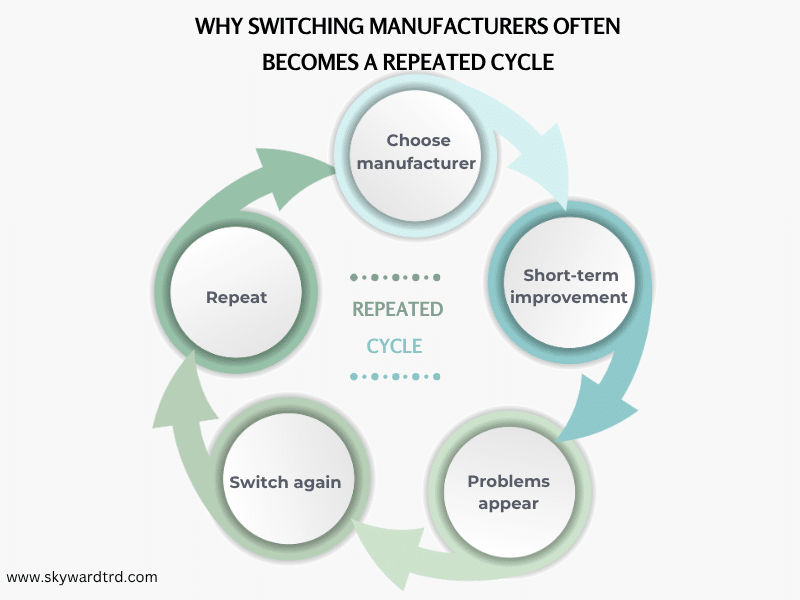
But over time, a pattern begins to emerge. Brands switch manufacturers more often than expected. What started as a promising collaboration gradually turns into repeated adjustments, delays, and inconsistent results.
This leads to a common assumption that the problem lies in execution, that the wrong factory was chosen.
In reality, the issue often begins much earlier.
Most brands are not choosing the wrong streetwear manufacturer. They are choosing with the wrong criteria. The way the decision is made does not reflect what actually determines long term success.
See the Common Mistakes Brands Make When Choosing a Manufacturer
Why comparing price, samples, and speed does not lead to the right decision
When evaluating a streetwear manufacturer, brands tend to rely on what is easiest to compare. Pricing offers a clear reference point. Minimum order quantities seem practical. A well made sample creates confidence. Fast replies suggest reliability.
Understand what really happens behind streetwear sampling results
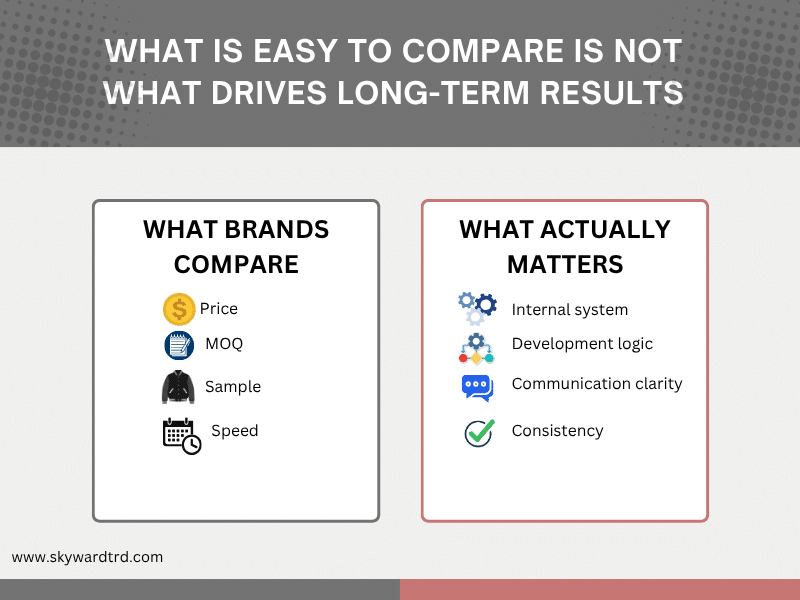
Individually, these factors make sense. Together, they create a structured way to decide.
However, these are surface indicators. They reflect what is visible at the beginning, not what sustains performance over time.
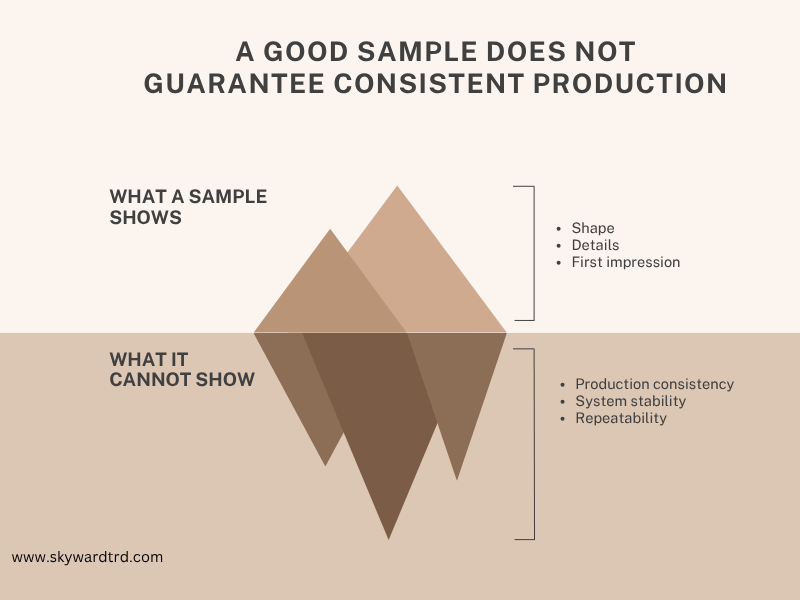
A streetwear manufacturer can provide a competitive quote while lacking internal coordination. A sample can look accurate while masking inconsistency in production. Communication can feel responsive without being precise.
What appears to be a rational comparison is often a shortcut. It simplifies the decision, but it does not capture the complexity of how a streetwear manufacturer actually operates.
This is why many decisions that feel correct at the beginning lead to instability later.
The real difference is not who can produce, but who fits how you operate
The key shift happens when the question changes.
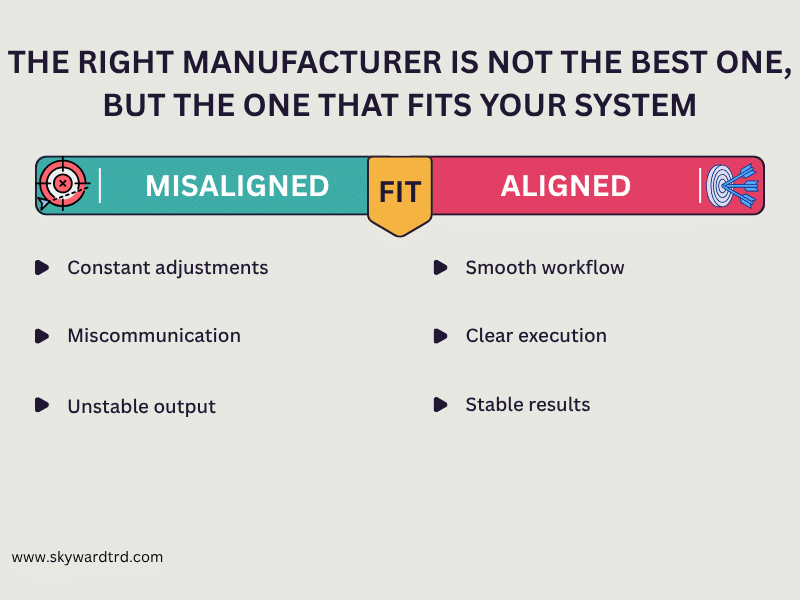
Instead of asking which streetwear manufacturer looks better, the focus moves to which one operates in a way that aligns with the brand.
Manufacturers are not neutral resources. Each one is structured differently. Some are optimized for speed, others for complexity. Some are built around flexibility, while others are designed for scale.
At the same time, brands function in different ways. Some move quickly and release frequently. Others focus on refining fewer products. Some require close collaboration, while others depend on clear and independent execution.
Learn how product development translates design into real production systems
The gap between these two systems is where most problems begin.
The real difference is not who can make the product. It is who fits how the brand operates. Without that fit, even a capable streetwear manufacturer can struggle to deliver consistent results.
At this point, choosing the right custom streetwear manufacturer becomes less about capability and more about finding a partner that fits your workflow, communication style, and long-term growth needs.
What actually determines whether a manufacturer can support you long term
Once the focus shifts to alignment, the way a streetwear manufacturer is evaluated begins to change.
The attention moves away from what is promised externally and toward how the system functions internally.
A manufacturer that fits well with a brand tends to show a certain level of clarity in how work is handled. Information flows consistently between development and production. Adjustments are processed without creating confusion. Communication reflects understanding, not just responsiveness.
Explore what actually defines a reliable streetwear manufacturer in practice
Over time, this creates a smoother rhythm. Fewer corrections are needed. Timelines become more predictable. Results become more stable across different orders.
When this structure is missing, the opposite pattern appears. Small changes require repeated clarification. Outputs vary even when inputs remain the same. Progress feels uneven.
These signals are not always obvious at the beginning, but they become clear as collaboration continues. They reveal whether a streetwear manufacturer can actually support the way a brand works.
Why the way you choose a manufacturer will shape how your brand grows
Choosing a streetwear manufacturer is often treated as a sourcing step, something that needs to be resolved in order to move forward.
In practice, it shapes everything that follows.
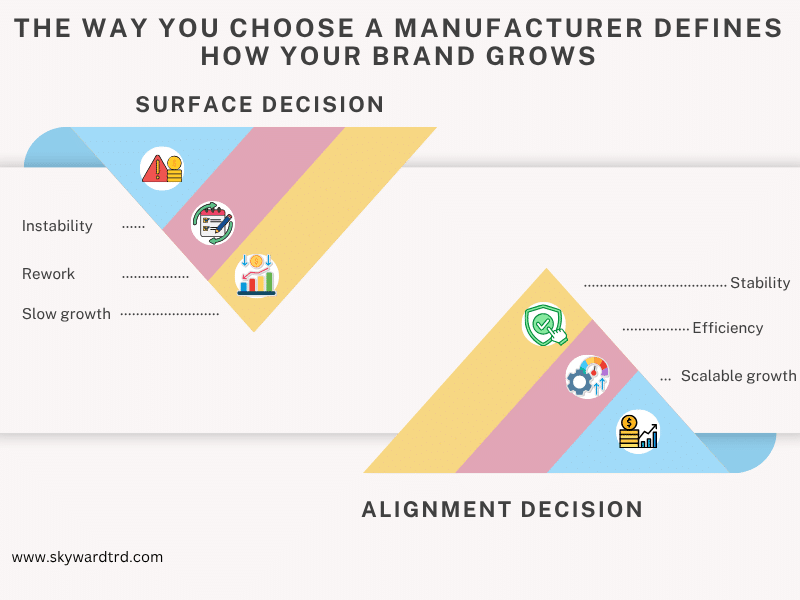
When the decision is based on surface level comparison, the relationship tends to remain reactive. Each project introduces new uncertainty. Each issue requires adjustment. Growth becomes harder to control.
Understand what actually builds long-term streetwear brand partnerships
When the decision is based on alignment, the structure becomes more stable. The streetwear manufacturer begins to operate in sync with the brand. Processes become more efficient. Results become more consistent.
Over time, this difference compounds.
Talk to a streetwear manufacturer that understands your workflow
The way you choose a streetwear manufacturer will eventually define how your brand grows. Not because one option is objectively better, but because one decision is based on what is visible, while the other is based on what actually matters.