Garment sample development is the bridge between a design idea and a product that can be produced consistently. The sketch matters, but the real work happens when materials, construction, fit, and supplier instructions become clear enough to sample.
Design may feel clear, but most problems start before production
In garment product development for streetwear brands, it often feels like the hardest part is creating the design. Once the direction is set and the sketch is approved, the assumption is that the rest of the process becomes more straightforward.
In reality, this is rarely where clarity begins.
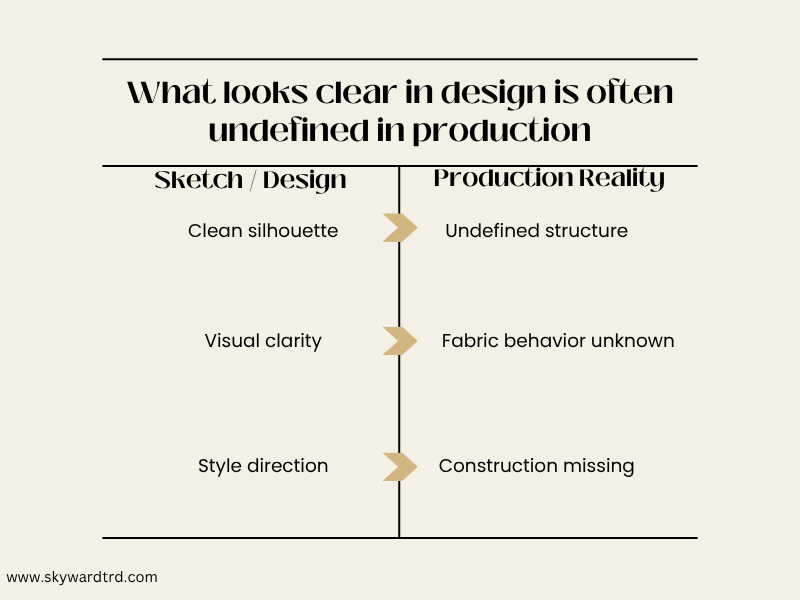
What appears resolved from a design perspective is often still undefined when it comes to production. A sketch can communicate a strong visual idea, but it does not necessarily contain the structural decisions required to turn that idea into a consistent product within garment product development. The issues that later appear in sampling or production are often not new problems. They are simply the result of decisions that were never fully defined in the first place.
Explore why most streetwear samples fail
A sketch shows the idea, but it doesn’t define how it works
A sketch is an effective way to communicate intention. It captures proportion, attitude, and overall direction, allowing teams to align visually.
But it does not define how the garment actually works.
In streetwear, this gap becomes even more noticeable. Many designs rely on oversized silhouettes, washed textures, layered materials, or subtle construction details that shape the final identity of the piece. These elements are highly sensitive to how the garment is built, not just how it is drawn.
Fabric weight, seam structure, finishing techniques, and garment balance all influence the outcome in ways that are not visible in a sketch. What looks effortless on paper often requires deliberate construction decisions to achieve in reality within garment product development.
This is where garment product development begins to diverge from design, not because the idea is unclear, but because the method of building it has not yet been defined.
What happens between sketch and sample is where products succeed or break
Between sketch and sample, there is a stage that is often overlooked, yet it determines whether a product will move forward smoothly or enter a cycle of revisions.
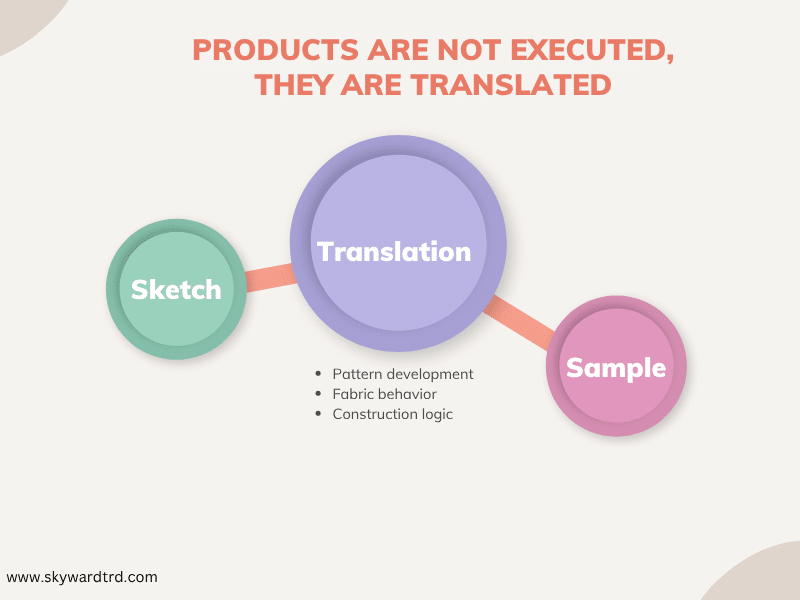
This stage is not execution. It is translation.
A sketch expresses intent. A sample represents outcome. What connects the two is the process that translates design into something that can actually be built within garment product development.
At this point, proportions are refined through pattern development, construction approaches are shaped by the intended result, and materials begin to influence how details are adjusted. The garment is no longer conceptual, but it is not yet final. It is being structured into something that can exist consistently beyond a single version.
For streetwear products, this translation layer carries even more weight. A slight variation in fabric weight can change the silhouette. A different wash or finishing process can shift the visual identity. Details that appear minimal in a sketch often become defining elements once the product is worn.
When translation is clear, the first sample aligns closely with the original intent. When it is not, the sample becomes a starting point for correction rather than confirmation.
See how a strong tech pack improves development
Strong streetwear brands don’t rely on sampling, they control the translation
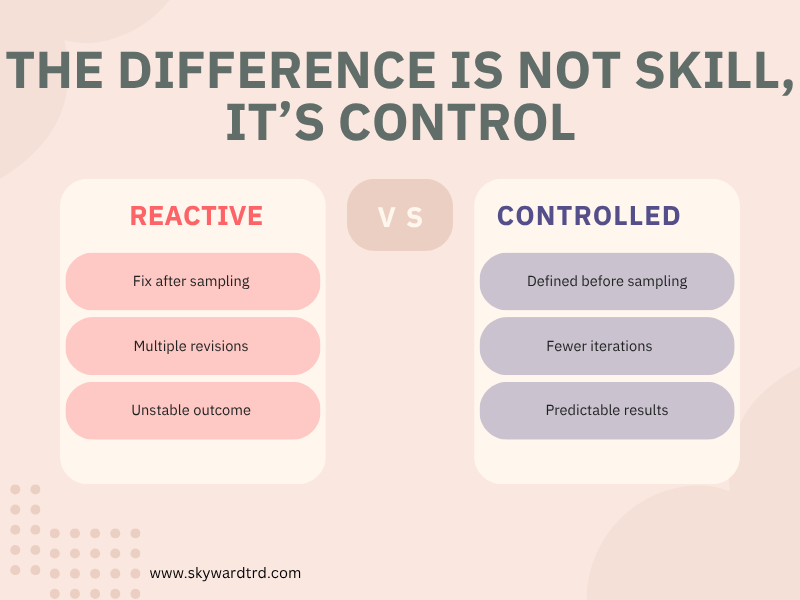
In more advanced garment product development systems, sampling is not treated as a way to discover problems, but as a step to confirm decisions that have already been translated with clarity.
This is a fundamental shift.
Instead of relying on sampling to interpret the design, strong streetwear brands focus on controlling how that interpretation happens before sampling begins. They understand how fabric behavior will affect silhouette, how construction will define structure, and how finishing processes will influence the final look.
As a result, garment product development becomes more predictable. Fewer revisions are required, communication becomes more efficient, and products move forward with greater stability.
What appears from the outside as smooth development is, in reality, the result of controlled translation.
Explore our streetwear manufacturing capabilities
Product development is not a step, it’s what makes ideas repeatable at scale
From the outside, garment product development can appear as a simple sequence from sketch to sample. But in practice, it is a system that determines whether an idea can be reproduced consistently over time.
A sketch introduces direction, but it does not guarantee outcome. A sample reflects progress, but it does not ensure stability.
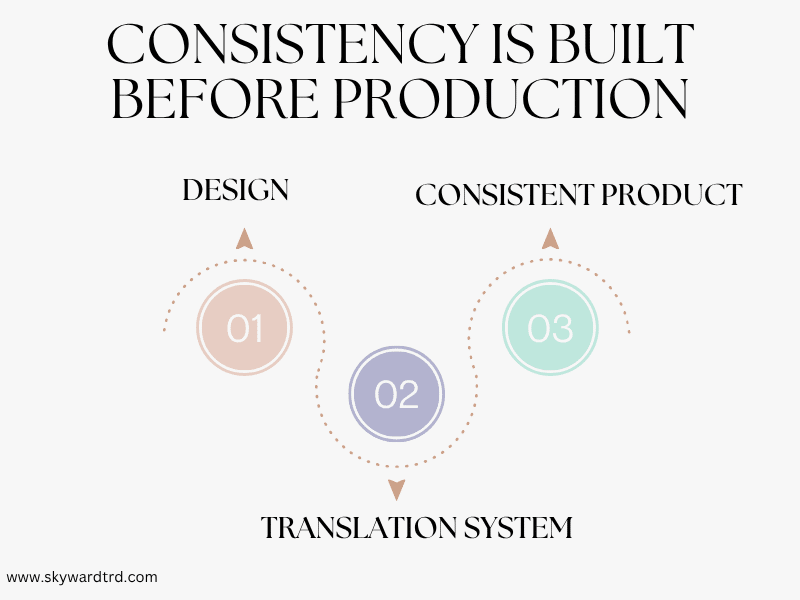
Consistency comes from the ability to translate design into structure, repeatedly and at scale within garment product development.
For streetwear brands building long-term collections, this is where real reliability begins. Not only in production, but in how each piece carries the same identity from one drop to the next.
Strong brands are not defined by better sketches. They are defined by stronger translation systems.
Because in garment product development, creativity creates the idea, but translation determines whether that idea survives.
Working with a trusted custom streetwear manufacturer helps ensure your designs are executed accurately and consistently.
View custom streetwear production projects
For the service-side workflow, see how SKYWARD handles streetwear sample development for brands.
You can also review the full development process for streetwear brands to see how sample decisions connect to production.