
Apparel sample development is what determines whether streetwear samples can deliver consistency.
Many suppliers can make samples, but not all can deliver consistency.
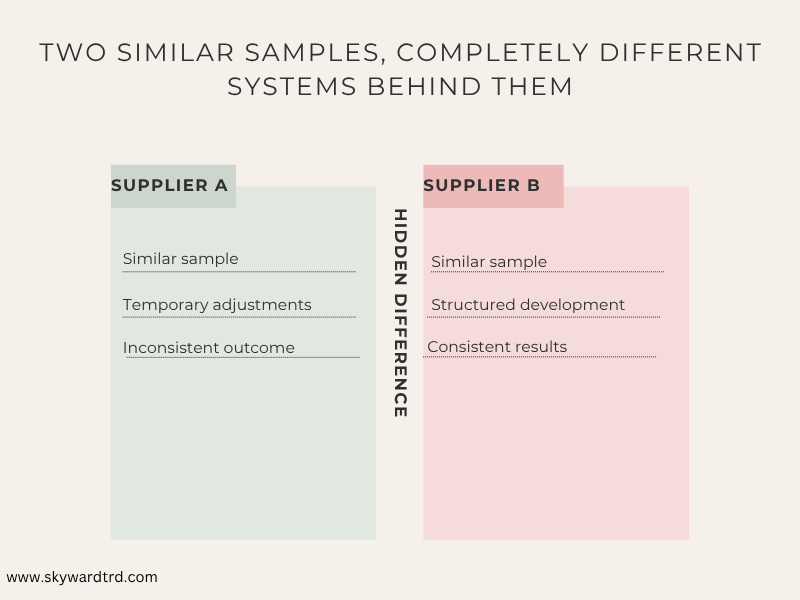
In streetwear product development, it is common for different suppliers to produce samples that appear similar at first glance. On the surface, the differences may seem minimal. The silhouette looks close, the details are present, and the overall direction appears aligned.
But once development continues, the gap becomes visible.
Some samples move forward with only minor adjustments, while others require repeated revisions. Some products maintain consistency across multiple styles, while others shift in fit, structure, or finish with every iteration.
The difference is not always obvious in the sample itself.
It lies in what happens behind it, within the apparel sample development process that supports it. The way this process is structured determines whether results can be repeated or not.
A sample shows the result, but it doesn’t show how it was built
A sample is often used as a way to evaluate a supplier. It provides something tangible to review, compare, and discuss.
But a sample only reflects an outcome.
It does not reveal how that outcome was achieved, how stable it is, or whether it can be repeated consistently. Two suppliers may produce samples that look similar, but the process behind them can be entirely different.
One may rely on adjustments made along the way, while another builds the result on a structured foundation. One may reach the desired look once, while another is able to reproduce it across multiple developments.
This is where differences in apparel sample development begin to surface. It is not about the sample itself, but about the system that supports it.
The most important work happens before the sample is ever seen
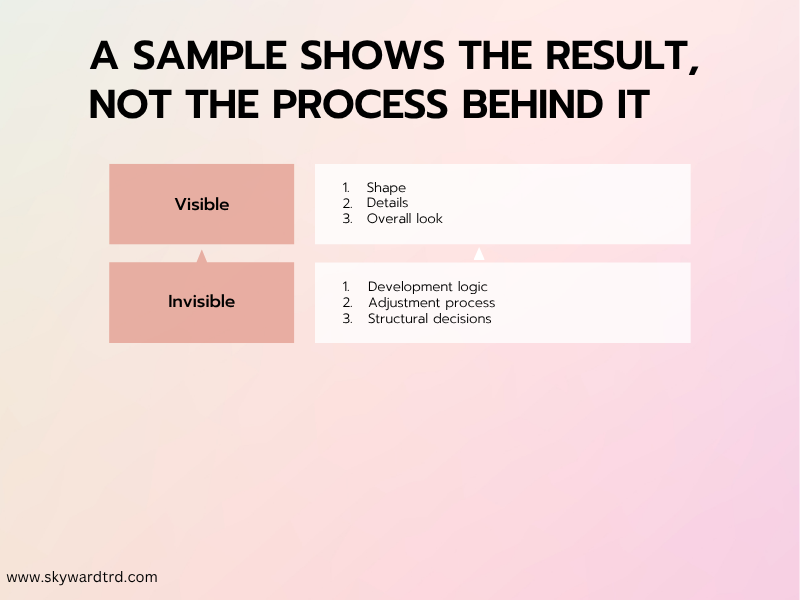
Behind every stable sample, there is a layer of work that is rarely visible from the outside.
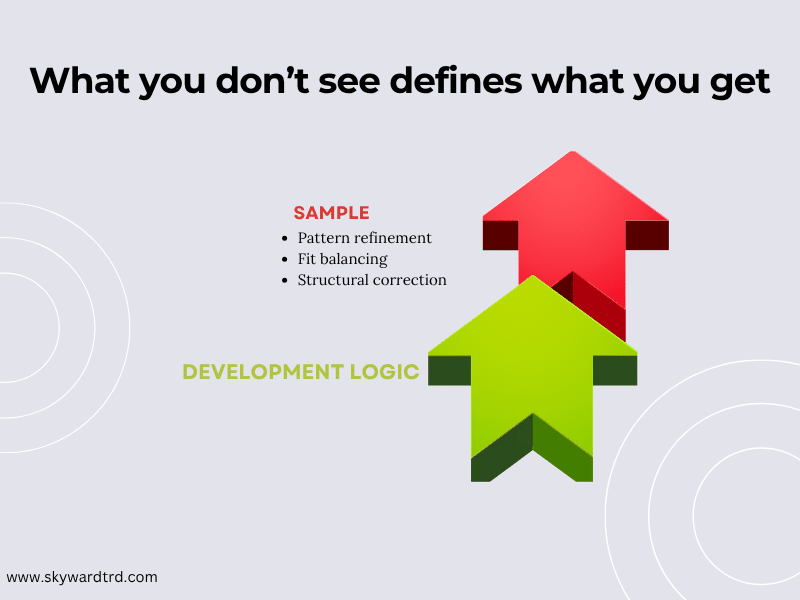
This includes how proportions are refined, how fit is balanced, and how construction details are adjusted to achieve the intended result. Small corrections, structural decisions, and repeated refinements all contribute to how the final sample performs.
In streetwear, where identity often depends on subtle differences in silhouette and detail, this hidden work becomes even more critical. A slight change in balance can affect the entire look. A minor adjustment in structure can determine whether a garment holds its shape or loses it over time.
This invisible layer is what separates basic sampling from structured apparel sample development. Without this layer, even a visually correct sample may fail to perform in production.
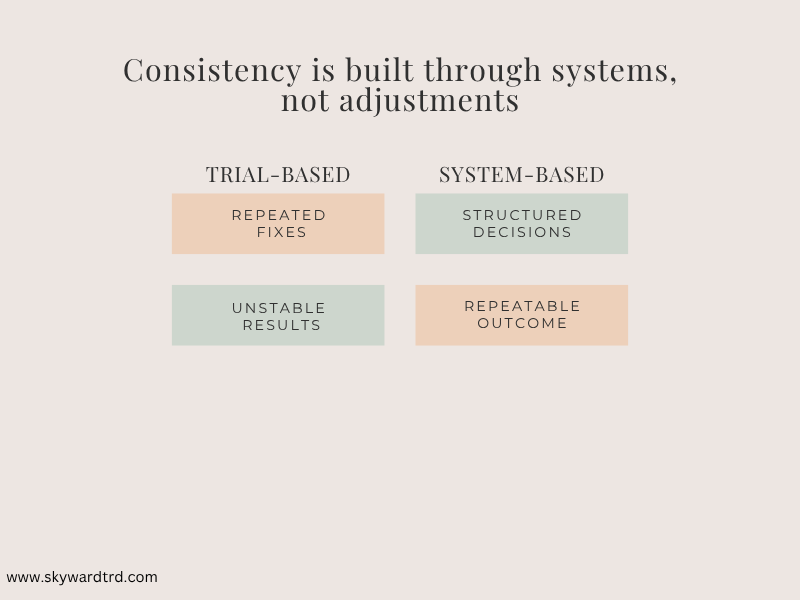
Consistency is not created at the sample stage, it is built through a system
Reliable product development does not depend on getting one sample right. It depends on being able to achieve the same result repeatedly.
This is where internal systems become essential.
A structured approach to apparel sample development allows decisions to be carried forward, rather than rediscovered each time. Adjustments are not isolated to one product, but inform the next. Over time, this creates a more stable process where outcomes become predictable.
More importantly, this approach reduces unnecessary revisions and shortens development timelines. Instead of correcting problems after they appear, the system prevents them from happening in the first place.
For streetwear brands working across multiple drops, this consistency is what allows a collection to feel cohesive. It ensures that different styles, even when developed separately, still align in fit, construction, and overall identity.
Choosing a supplier is not about the sample, it’s about what supports it
When evaluating suppliers, it is natural to focus on the sample itself. It is the most visible and immediate reference point.
But the more meaningful question is what stands behind it.
Is the result based on a repeatable process, or on a series of adjustments that may not carry forward? Can the same outcome be achieved again across different styles, fabrics, and timelines? Does the development process support long-term consistency, or does it rely on trial and correction each time?
These factors are not always visible in the first sample, but they define the reliability of every product that follows.
In streetwear product development, strong apparel sample development is not about producing a single successful sample. It is about building a system that supports consistent results over time. This is what allows brands to scale without losing control over quality.


