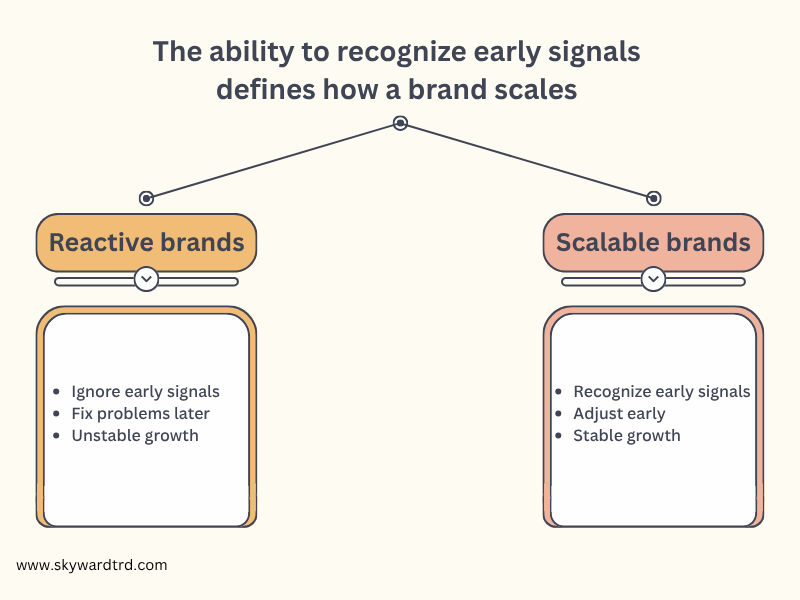
Why most brands only realize the problem after it’s already too late
Many brands begin working with a clothing manufacturer with a sense of momentum, often without realizing they are already encountering early clothing manufacturer problems. The first sample looks acceptable, communication feels responsive, and the process appears to be moving forward.
At this stage, there is very little reason to question the decision.
The shift usually happens later. Timelines begin to feel less predictable. Adjustments take longer than expected. Outcomes become harder to control. At some point, the brand starts considering a change.
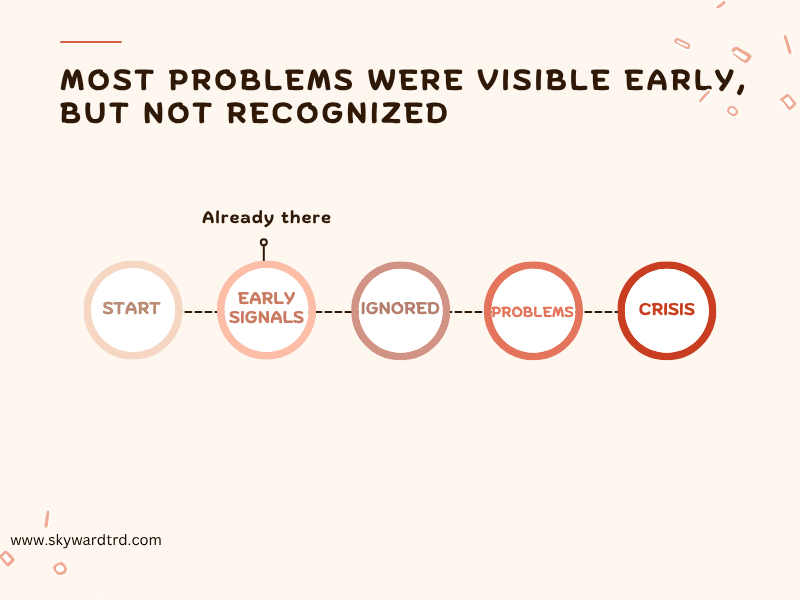
What is often overlooked is that these clothing manufacturer problems rarely appear suddenly.
In most cases, the signals were already present from the beginning. They were simply not recognized as indicators of deeper issues.
A clothing manufacturer does not become problematic overnight. The patterns that lead to instability are usually visible early on, but they are interpreted as minor or temporary.
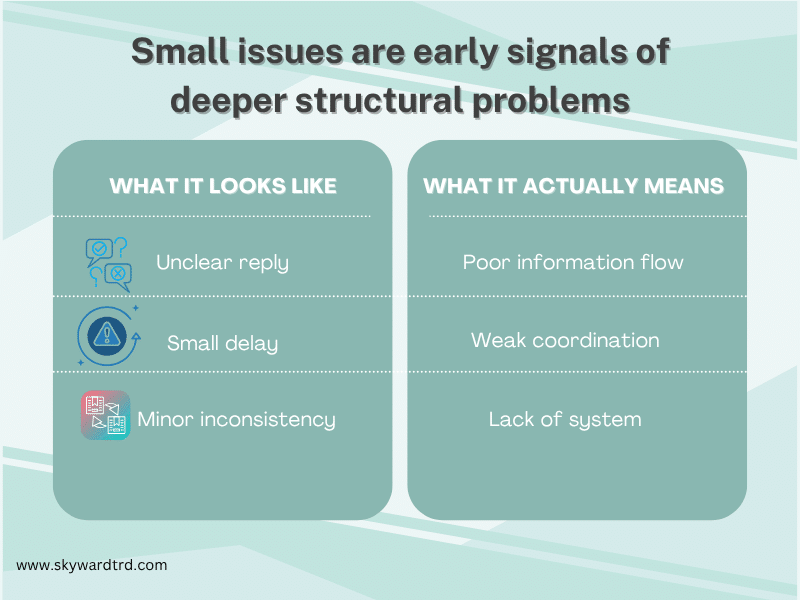
Why small issues are not random, but early signals of bigger problems
In early collaboration, certain behaviors are easy to dismiss. A slightly unclear reply may be seen as a language issue. A small inconsistency in a sample may be considered normal. A delay in response may be attributed to workload.
Individually, none of these seem critical.
But these are not isolated incidents. They are often early expressions of clothing manufacturer problems that originate from internal systems.
The difficulty is that brands tend to evaluate these moments as surface level issues, rather than as signals of underlying patterns.
What appears to be a small misalignment in the beginning can evolve into larger clothing manufacturer problems when production becomes more complex. As more styles are introduced and timelines become tighter, the same patterns repeat, but with greater impact.
Understanding this shift is essential. The goal is not to react to problems after they grow, but to recognize what they represent at an early stage.
The patterns you notice early are the same ones that create instability later
There are certain patterns that tend to appear early when working with the wrong clothing manufacturer. They are not dramatic. They do not immediately disrupt progress. But they repeat in ways that gradually affect the entire process.
One of the most common signals is communication that feels responsive but lacks clarity. Messages are answered quickly, yet key details remain vague, requiring follow up questions to fully understand the situation.
Another signal appears when outputs change even though inputs remain consistent. A sample may look correct once, but small variations begin to appear across iterations without clear explanation.
There are also moments when simple adjustments require more back and forth than expected. What seems like a straightforward change turns into multiple rounds of clarification, suggesting that information is not being processed consistently.
In some cases, timelines are provided with confidence, but shift as the process moves forward, without a clear reason tied to specific steps.
Finally, there is a pattern where each stage feels disconnected from the previous one. Development, sampling, and production do not seem to follow a continuous logic, creating friction at every transition.
Individually, these signals may appear manageable. Together, they reveal a pattern of clothing manufacturer problems that is difficult to stabilize over time.
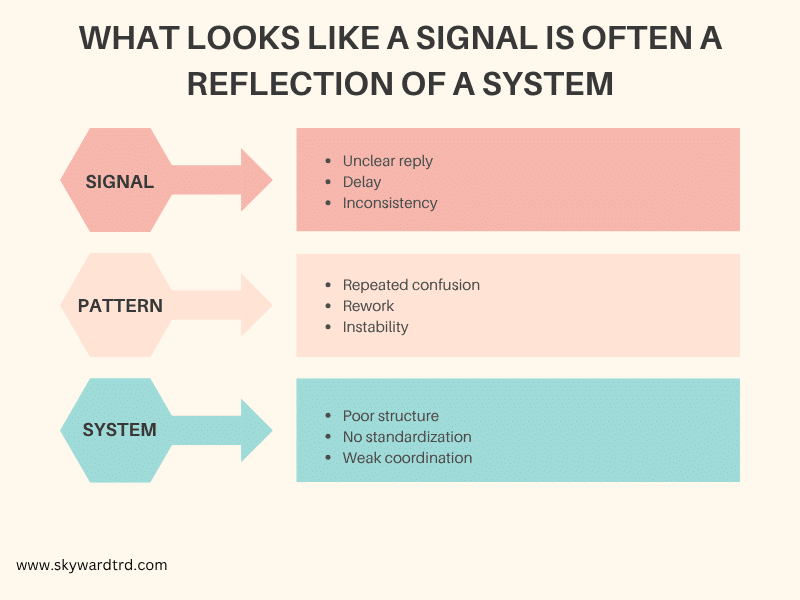
What these signals actually reveal about how a manufacturer operates internally
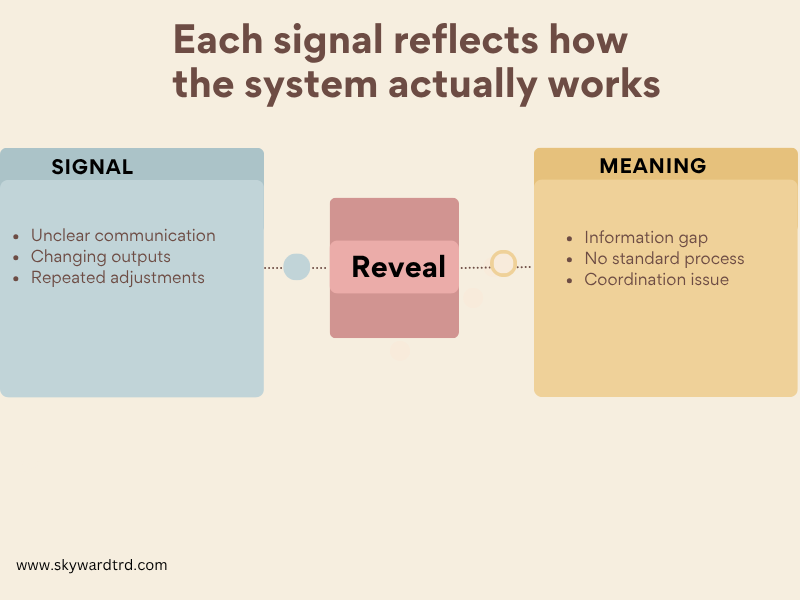
These early signals are not random. They are reflections of how a clothing manufacturer is structured internally.
When communication lacks clarity, it often indicates that information is not being transferred effectively between teams. When outputs vary, it suggests a lack of standardized processes. When adjustments require repeated explanation, it points to gaps in coordination.
Shifting timelines without clear reasoning often reflect a reactive workflow rather than a structured one. Disconnected stages indicate that different parts of the process are not aligned.
In other words, what appears as small issues at the surface level are expressions of deeper system behavior, which is the root cause of recurring clothing manufacturer problems.
This is why they tend to repeat. They are not caused by individual mistakes, but by how the system operates as a whole.
Understanding this changes the way a clothing manufacturer is evaluated. The focus shifts from isolated outcomes to underlying patterns.
Why recognizing these patterns early is what separates reactive brands from scalable ones
Once these patterns are understood, the approach to working with a clothing manufacturer becomes more deliberate.
Instead of waiting for problems to accumulate, brands can begin to observe how early interactions reflect long term behavior. Small signals are no longer dismissed, but interpreted as indicators of how the process will evolve.
This does not mean reacting to every minor issue. It means recognizing when a pattern begins to form, and understanding what that pattern implies.
When a clothing manufacturer shows consistent clarity, stable outputs, and coordinated progression, the process tends to become smoother over time. When the opposite patterns appear repeatedly, the complexity usually increases.
The difference is not always visible at the beginning, but it becomes significant as the brand grows.
Recognizing these signals early allows brands to make more informed decisions, before clothing manufacturer problems become difficult to manage.