
Many designs don’t fail in production, they fail the moment they are designed
In streetwear product development, many failures are not caused during production, but originate from underlying garment construction issues that were never resolved at the design stage.
It is common to see designs that look strong on paper but struggle once they move forward. The initial reaction is often to question production, timelines, or execution.
But in many cases, the issue is not something that happens during production.
It is already built into the design itself.
Many of these failures are not random. They are often rooted in garment construction issues that were overlooked when visual decisions were made without considering how garments are actually built.
What appears visually compelling does not always translate into something that can function as a product. The failure is not a result of poor manufacturing, but of decisions that were never aligned with real construction logic.
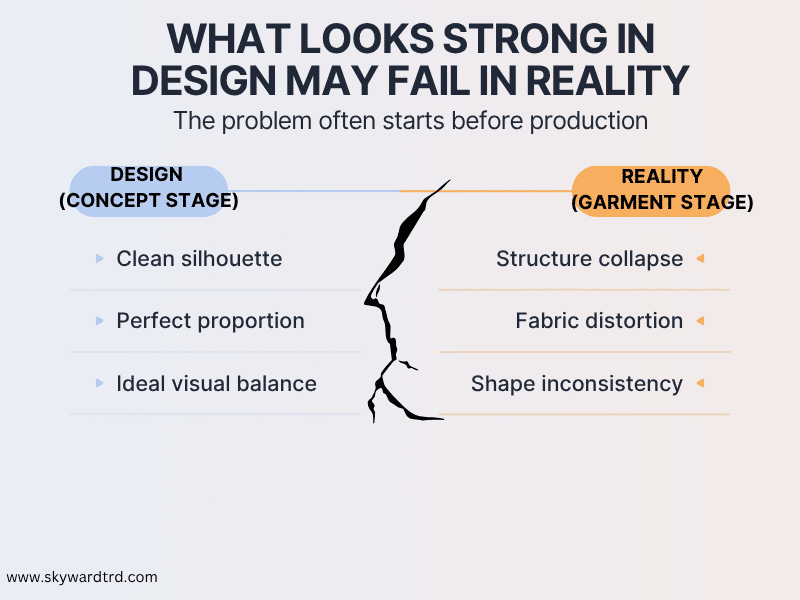
A strong visual concept doesn’t guarantee a workable product
Streetwear design often focuses on silhouette, proportion, and visual impact. A piece may look clean, oversized, layered, or heavily detailed in a way that feels intentional and distinctive.
But visual strength alone is not enough.
A design can appear balanced in a sketch while ignoring how fabric weight will affect structure. It can suggest a specific drape without considering how seams will hold it in place. It can rely on finishing effects without accounting for how those processes interact with different materials.
This is where garment construction issues begin to take shape.
Not because the design lacks creativity, but because it has not yet been grounded in how garments behave once they are worn, washed, and reproduced.
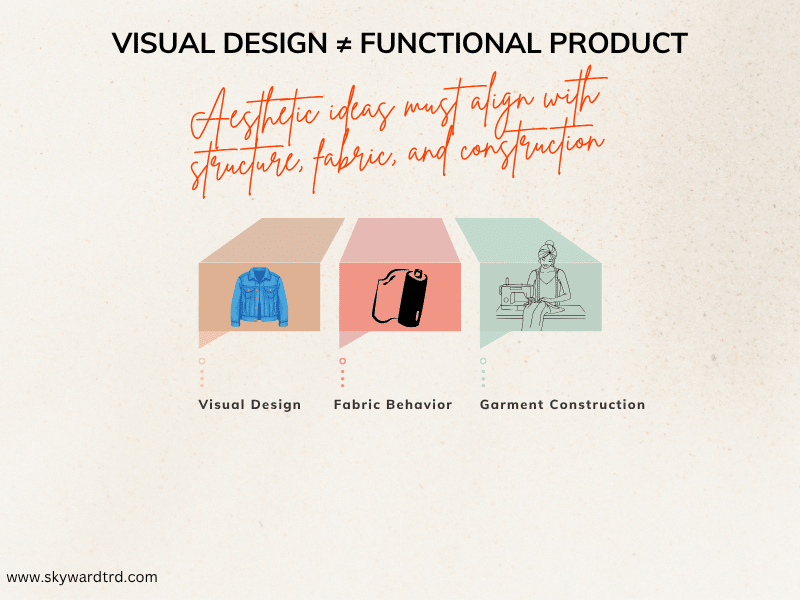
Aesthetic intent and manufacturability don’t always align
One of the less visible tensions in garment product development is the difference between what looks right and what can be built consistently.
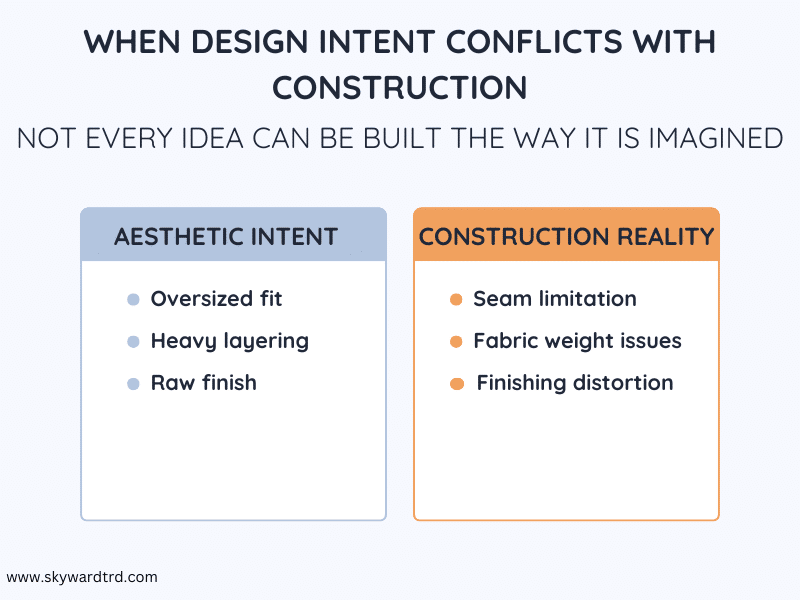
Streetwear often pushes boundaries in fit, texture, and construction. Oversized proportions, mixed materials, or distressed finishes are not just stylistic choices. They require specific structural support to achieve the intended result.
When aesthetic decisions are made without considering construction logic, conflict emerges.
A seam may not support the intended shape. A fabric may collapse instead of holding structure. A finishing technique may distort proportions rather than enhance them.
These are not production mistakes. They are garment construction issues caused by a disconnect between design intent and physical structure.
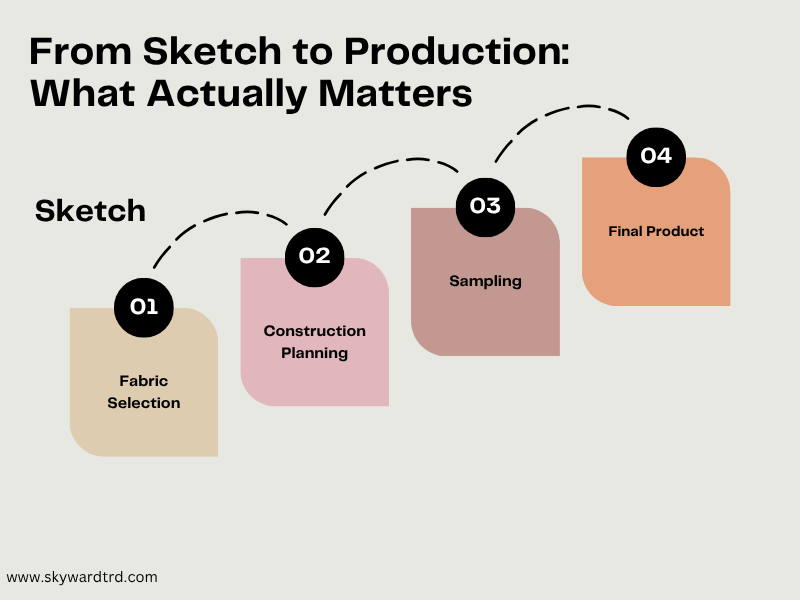
Designing for production means thinking beyond the sketch
Designs that move forward smoothly tend to share one characteristic. They are developed with an understanding of how they will be built.
This does not limit creativity. It shapes it.
In streetwear, this means considering how fabric choice influences silhouette, how construction defines durability, and how finishing processes affect the final identity of the garment. Small adjustments made at the design stage can significantly change how a product performs later.
When these factors are addressed early, many garment construction issues can be avoided before they ever reach production.
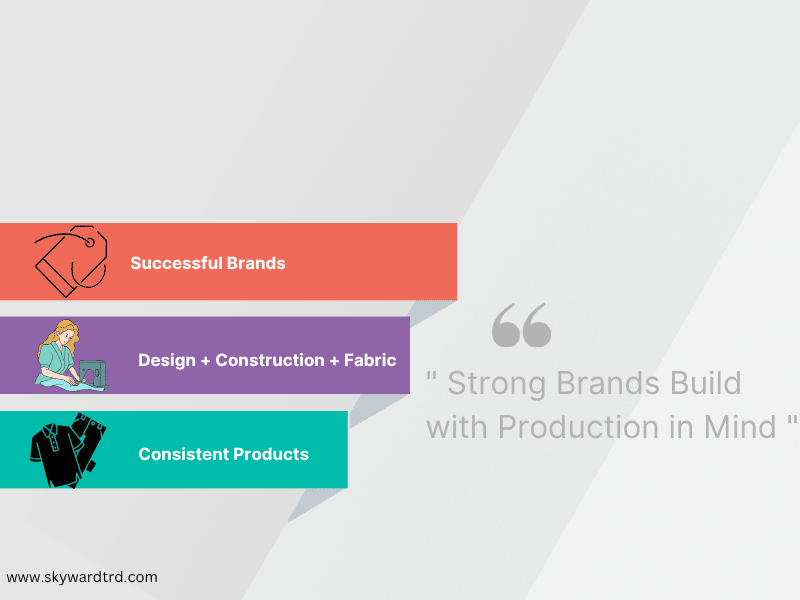
The most consistent brands design with production in mind from the start
Across streetwear brands that maintain consistency over multiple drops, a pattern begins to emerge. Their strength is not only in design direction, but in how their designs are developed.
They do not treat production as a separate phase. It is part of the design process itself.
Decisions about materials, construction, and finishing are considered alongside aesthetics, not after. This allows each piece to carry the intended identity without relying on repeated adjustments later.
As collections scale, this approach becomes increasingly important. It enables brands to maintain clarity across different styles, seasons, and product categories.
In the end, the difference is not between creative and technical thinking. It is between designs that exist only visually, and designs that are built to work in reality.
And in streetwear product development, avoiding garment construction issues is often decided long before production begins.
We help brands turn ideas into production-ready products.


